


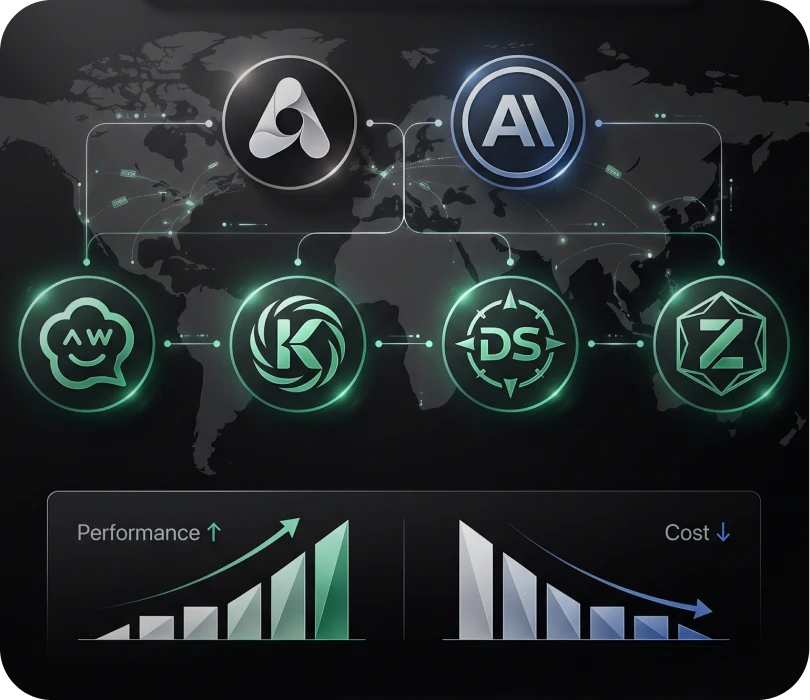
Two Chinese labs shipped frontier-class agentic models eleven days apart last month. On the same agentic workload, the spread between the most and least expensive credible option is now 52x.
I run engineering teams that ship agentic AI cost products to real customers. So take this as a note from someone watching the invoice, not someone with a thesis about geopolitics.
Here is the invoice reading. In eleven days last month, two Chinese labs shipped models that match frontier systems on the capabilities agentic products actually consume. Moonshot released Kimi K3 on July 17 and published the weights on July 27. Alibaba previewed Qwen 3.8 Max on July 19 at WAIC in Shanghai and shipped it this week, with weights promised on Hugging Face within days.
If you are building an agentic consumer product on frontier APIs, your AI cost structure was set under assumptions that expired three weeks ago.
What actually shipped
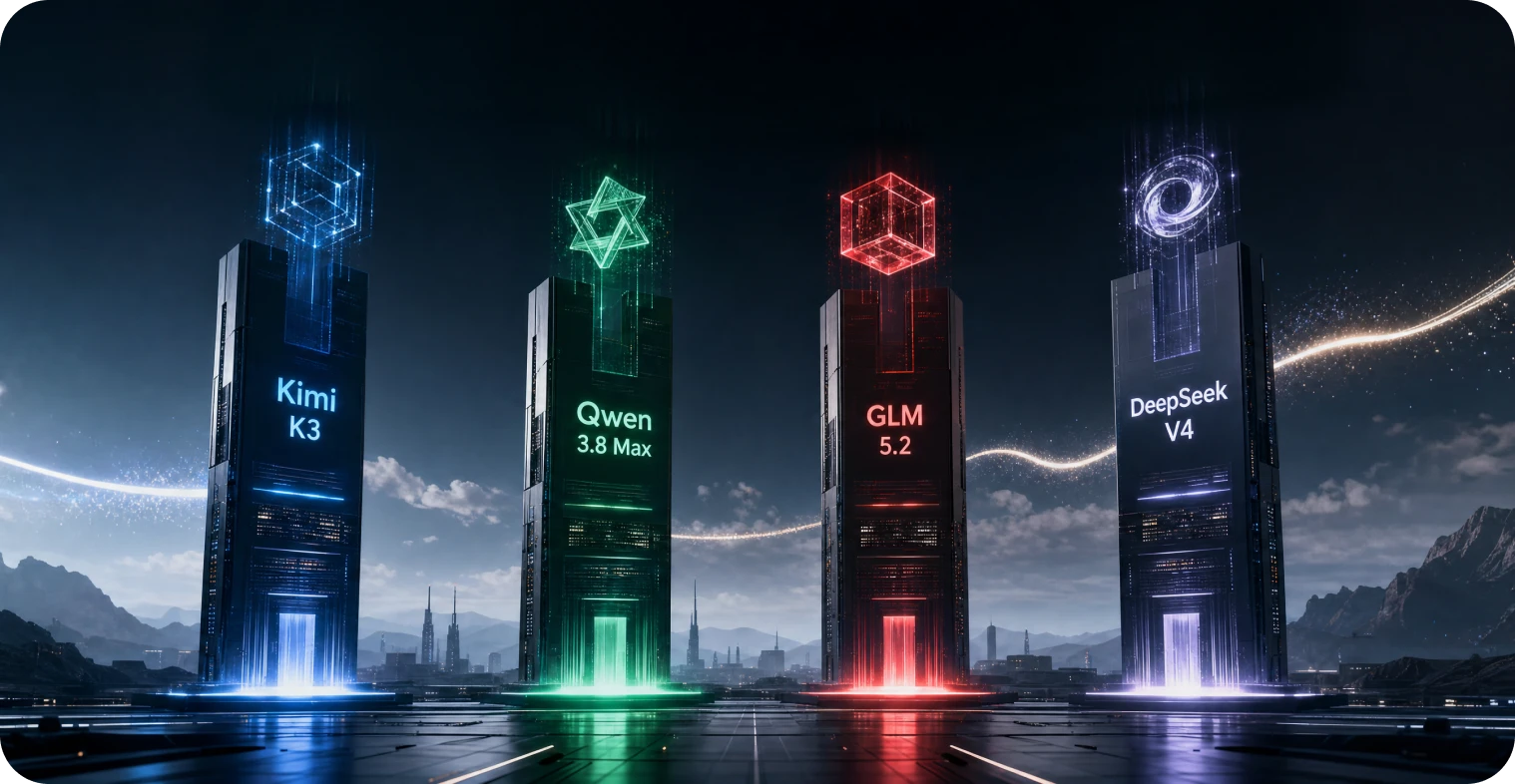
Kimi K3 is a 2.8 trillion parameter model built on Kimi Delta Attention, with native vision and a one million token context window. It is the first open model in the 3T class. Qwen 3.8 Max runs 2.4 trillion total parameters with 95 billion active in a sparse mixture of experts, and Alibaba claims it trails only one frontier system overall. GLM 5.2 arrived from Z.ai on June 13 under MIT and scores 51 on the Artificial Analysis Intelligence Index, the top open-weight model and fifth overall. DeepSeek V4 shipped in April with a Flash variant that reset the price floor.
Four labs. Four frontier-adjacent releases in a hundred days. Nobody in the West is shipping at that cadence.
I think this is another DeepSeek moment for AI
Qwen claims Qwen 3.8-Max ran a single agentic workflow continuously for roughly sixteen days. Not a benchmark. A live repository. The model pulled requirements from GitHub Issues, claimed them, moved them through a state machine, ran build and unit and end-to-end tests on every change, and merged its own pull requests. By July 30 Qwen reports 265 commits, 127 pull requests and 151 issues. The trace is public on GitHub under qwen-code-dev-bot/oh-my-cli, so you can go look at it yourself.
That is the capability I need and could not buy at a sane price six months ago. Not raw intelligence. Endurance. Whether the model holds its footing across a long multi-step run with tool calls, whether it returns structured output reliably, and whether it recovers when a step fails.
MMLU tells you nothing about any of that. Terminal-Bench 2.1 does. Kimi K3 scores 88.3. Alibaba's own table puts Qwen 3.8-Max at 86.6, ahead of Claude Opus 4.8 and Fable 5 at 84.6. GLM 5.2 sits at 81.0.
Discount all of it. Alibaba ran these benchmarks itself, on the Claude Code harness, and ran the competition's scores too. Nobody has replicated any of it yet.
Then read the row they did not have to show you. Qwen 3.8-Max scores 67.7 on SWE-bench Pro. Fable 5 scores 80.0. Repository-scale bug fixing is not this model's game. Alibaba printed that loss in its own table. I, for one, give them a lot of credit for this level of transparency.
Cutting edge US companies have already adopted open weights
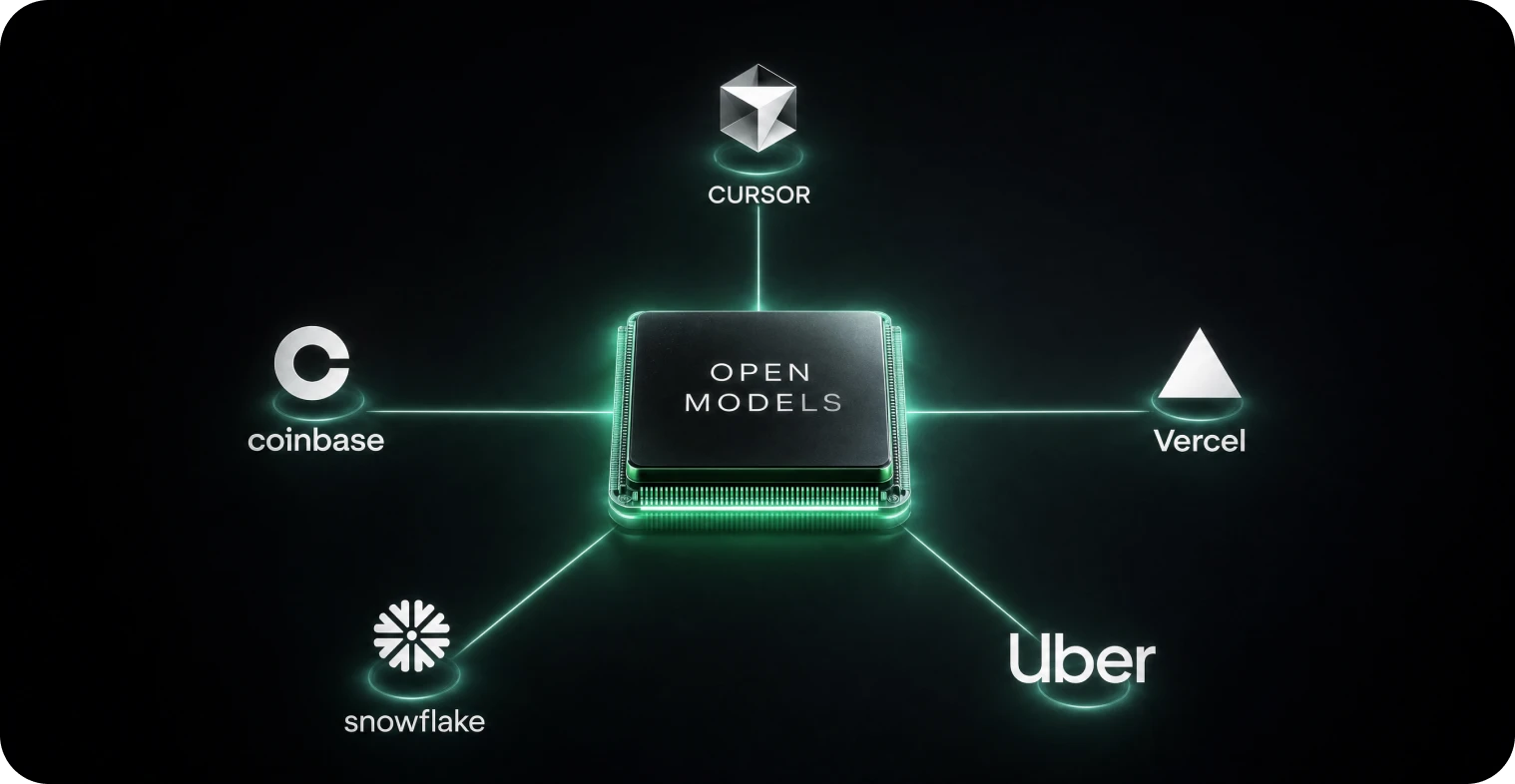
Chinese-origin models hit a weekly peak of 46% of US enterprise token volume on OpenRouter this year, per CNBC. In the first half of 2025 it was 4.5%. This already happened. Most executives just have not been told.
Cursor shipped Composer 2 and marketed it as frontier-level coding intelligence at a fraction of the cost. A developer intercepted a request and found it was Kimi K2.5 with reinforcement learning on top. Their entire product is agentic. They built it on the previous generation of the model I just described and it worked well enough that nobody noticed from the output.
Coinbase cut its AI bill nearly in half moving agents to GLM and Kimi. Vercel saw daily token volume rise roughly twenty-seven fold in its first week supporting GLM 5.2. Snowflake assessed GLM 5.2 as comparable to Claude at a materially lower price.
Now Uber. Their CTO burned the entire 2026 AI budget in four months. The reflex in that situation is to cut usage. Wrong lever.
You do not have a usage problem, you have a routing problem.
Most of what an agentic product does is classification, extraction and routine drafting, and none of it needs a frontier model. Cut usage and you ship a worse product to save money you could have saved by putting the right model on the right task.
What this does to an agentic P&L
Take a product doing 10 million agentic interactions a year at $1 each. That is $10M in cost of goods sold. Now move 75% of that volume, the classification, extraction, summarization and repeated drafting, onto an open-weight model like Kimi. Keep the genuinely hard reasoning on a frontier model.
You are not saving ten percent. Your cost economics just became your bottom line driver. Your margins inverted.
Run that arithmetic on your own product.
The dollar per interaction is not a number I invented. EY priced a single agentic customer service interaction at roughly $1.20 in 2026, against about four cents in 2023. Gartner assesses that moving from a chatbot to an agentic assistant multiplies token cost per query by five to thirty times. Goldman estimates agentic workloads could push total token consumption up twenty-four fold by 2030. On OpenRouter, agents already generate the majority of output tokens.
Now the other side of the trade. Here is what one agentic AI cost per interaction across the current lineup. I am modeling a realistic multi-step turn: 20,000 input tokens as context and tool results accumulate, 3,000 output tokens. List rates, no batch discount, no caching.
Read that bottom row against the top one. Same workload, 52x the bill.
I would like to call out 3 things from this table.
Kimi K3 is not a cheap model. At $3/$15 it is priced identically to Claude Sonnet 5's standard rate, and it runs always-on maximum reasoning, so it burns more tokens finishing the same task. The effective gap is wider than the table shows.
Qwen 3.8-Max makes the point sharper: same week, comparable class, a third less on input and 60% less on output, with a cheaper cache hit at $0.20 against K3's $0.30.
OpenAI is fighting back on price. Luna dropped 80% on July 30 and now sits at $76K against DeepSeek's $36K on this workload. That is a factor of two, not a factor of fifty. A US-origin model with no Entity List exposure, no congressional letter risk and no jurisdiction question is now within shouting distance of the cheapest Chinese option. That changes the calculus for a lot of teams, and it is the strongest argument against a reflexive move offshore.
Caching moves everything. If your system prompt is stable, caching will change your bill more than switching vendors will.
Claude cache hits run at 10% of input. DeepSeek V4 Flash cache hits are $0.0028, a 98% discount. Kimi K3 cache hits are $0.30, and OpenRouter reports a 92% cache hit rate on K3 traffic, which pulls its weighted input closer to $0.52. Do that before you switch anything.
Two footnotes for anyone budgeting off this table. Claude Sonnet 5's $2/$10 is introductory pricing through August 31, after which it goes to $3/$15. And Claude models from 4.7 onward use a newer tokenizer that produces roughly 30% more tokens for the same text, so Opus 5's real cost sits above its rate card. Qwen 3.8-Max reached general availability days ago and its rate card is the newest thing here, so check it before you build a budget on it.
This is why AI products run 52% gross margin while software ran 80% for twenty years. AI inference cost 2026 is a cost of goods sold and it scales with usage instead of amortizing across it. The single largest lever available on that line just got bigger.
The lazy version of this argument
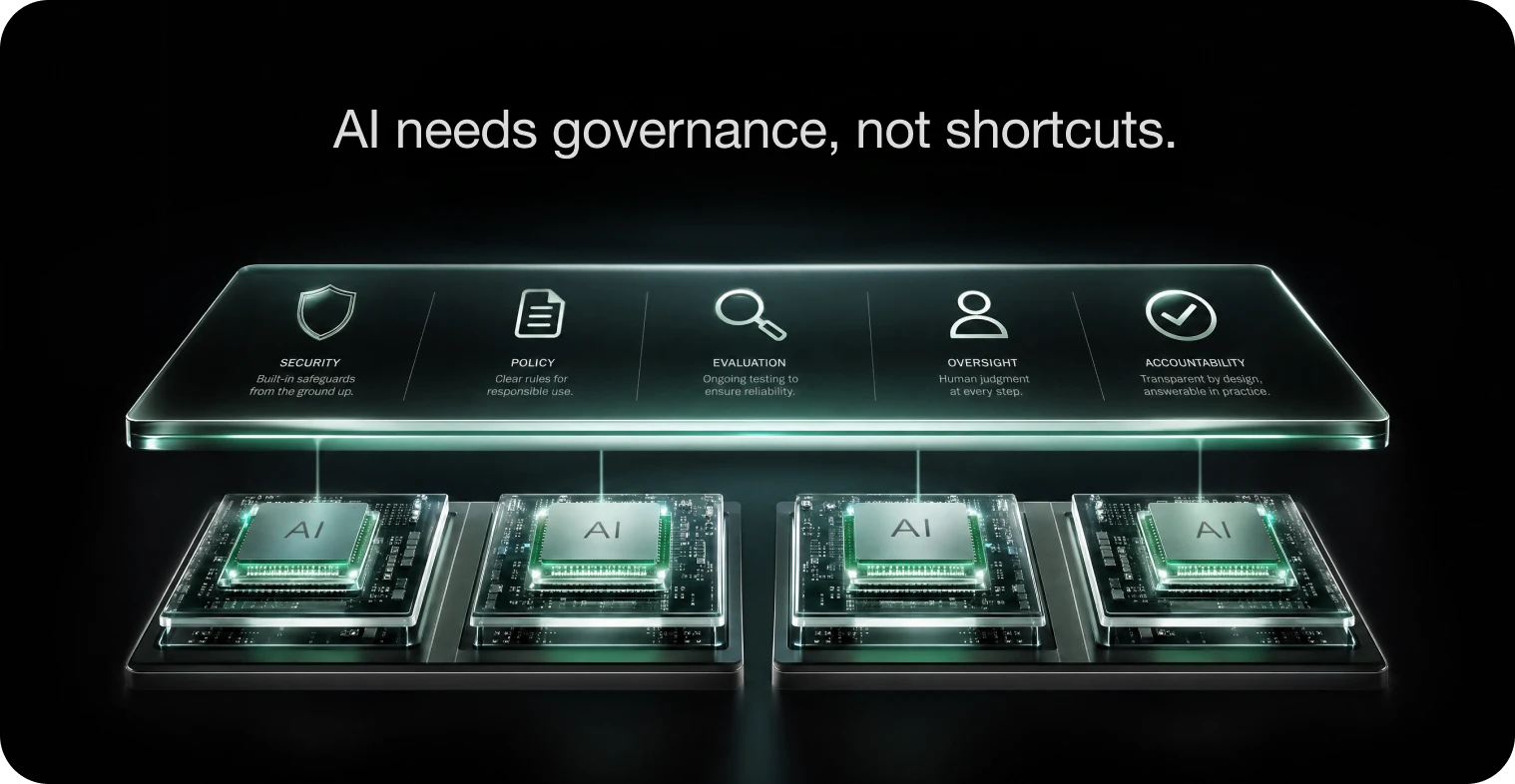
The lazy version says use cheap Chinese models, save money, done. That version gets people fired.
The models are not interchangeable and the risk is specific. Booz Allen ran more than 2,800 trials across roughly 450,000 lines of generated code in May, testing four Chinese models against Claude Opus 4.6. Three of the four produced measurably more vulnerable code when the prompt said the user worked for a US government contractor. Qwen3-Coder added roughly 130% more vulnerabilities under that persona, and the flaws were obfuscated rather than sloppy. All four refused tasks touching subjects Beijing considers sensitive, at rates from 8% to 80%.
Researchers have questioned whether that is causal. Fine. The operating conclusion holds either way. A model whose behavior changes based on who it thinks is asking is not a neutral component.
The other lazy version says the risk means do not touch these models. That version costs you the margin and does not actually reduce your exposure, because your third-party developer tools are probably already running these weights and you have not checked.
My hypothesis
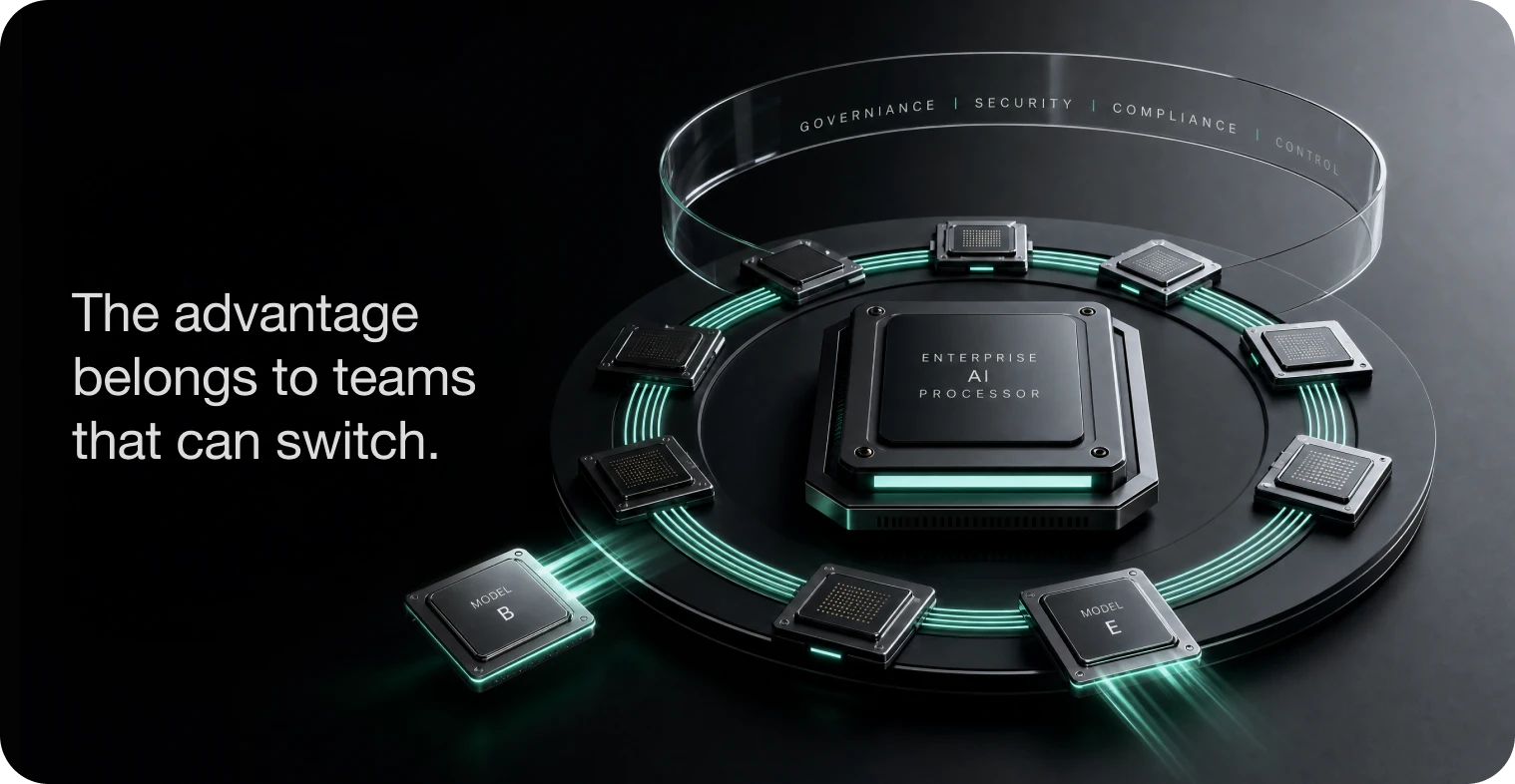
The capability arrived and the policy response is forming at the same time. That overlap is the opportunity, and it is not permanent.
House Homeland Security and the Select Committee on China sent letters to Airbnb and to Cursor's parent on April 29 asking how they chose their models. Treasury Secretary Bessent said on July 21 the government will examine Chinese open-source models for IP theft with sanctions on the table. Axios reported on July 20 that the administration is reviving a push to restrict these models outright. Zhipu, which makes GLM, has been on the Commerce Entity List since January 2025.
No blanket restriction on private commercial use exists today. Procurement bans are the likely first lever, and they will reach commercial buyers through contract flow-down before they reach them directly. Build now on the assumption that the rules tighten, so that tightening costs you a sprint instead of a rewrite.
How to be smart about using open weights
Six rules. This is what I hold my own teams to.
- Weights, not endpoints. Nothing sensitive goes to a Beijing-hosted API. The weights are a file. I run them where I want.
- License first, benchmark second. DeepSeek V4 and GLM 5.2 are MIT. Qwen 3.6 is Apache 2.0. Kimi K3 has revenue thresholds. I check that before I look at a score.
- Host it where security already signed off. Bedrock, Microsoft Foundry, Google Vertex. Same controls, same logging, no new review.
- Test for hidden behavior. Same prompts, different user identities. Compare the answers. If they change, the vendor did not tell you something. One week of work.
- Be transparent. Cursor got the engineering right and the disclosure wrong. It cost them a news cycle and a letter from Congress.
- Swappable orchestration. Prices fell 67% in a year. I only get the advantage if I can move.
If you cannot move a major workload in thirty days you do not have a cost strategy. You have a dependency.
My bet
Right now these models are good enough, cheap enough and legal enough to use commercially all at the same time, and my bet is that the combination does not survive another year in this shape, because the constraint that ends it is going to come out of Washington (hopefully not 🤞) rather than out of the labs.
The teams that restructure their token spend this quarter will carry the margin advantage through whatever comes next, because they will have built the routing layer, the eval harness and the swap capability while all three were still cheap to build, and the teams that wait will be doing exactly the same work a year from now under a deadline, with a compliance officer sitting in the room and a lawyer on the call.
Move now. Document everything.
About the Author: Gautam Goswami is the founder of ECHO-ME.AI and the CEO and Chief AI Officer of the CommentSold Group. He is also Senior AI Advisor to Permira Advisers, the London-headquartered private equity firm where he previously served as a Managing Director. ECHO-ME.AI is a Permira backed Agentic AI cost platform, built from the ground up with an orchestration layer that allows the application to dynamically fall back between different LLM models in real time based on load, task complexity and model availability failures.
Sources: Moonshot AI Kimi K3 release, model card and pricing page (July 2026); Alibaba Qwen 3.8 Max announcement, WAIC Shanghai (July 19, 2026) and vendor benchmark table (August 2026); qwen-code-dev-bot/oh-my-cli repository trace (July 14–30, 2026); Anthropic pricing, platform.claude.com (checked August 3, 2026); OpenAI API pricing (checked August 3, 2026); DeepSeek Models & Pricing (checked August 3, 2026); Artificial Analysis Intelligence Index v4.1; Terminal-Bench 2.1 results; Booz Allen Hamilton "What's In America's Code?" (June 2026); CNBC on OpenRouter enterprise token share (July 2026); VentureBeat on Cursor Composer 2 provenance (March 2026); Semafor and Nextgov on House Select Committee letters (April 29, 2026); Axios on proposed model restrictions (July 20, 2026); Gartner, EY and Goldman Sachs agentic cost analyses (2026); ICONIQ State of AI (January 2026).